
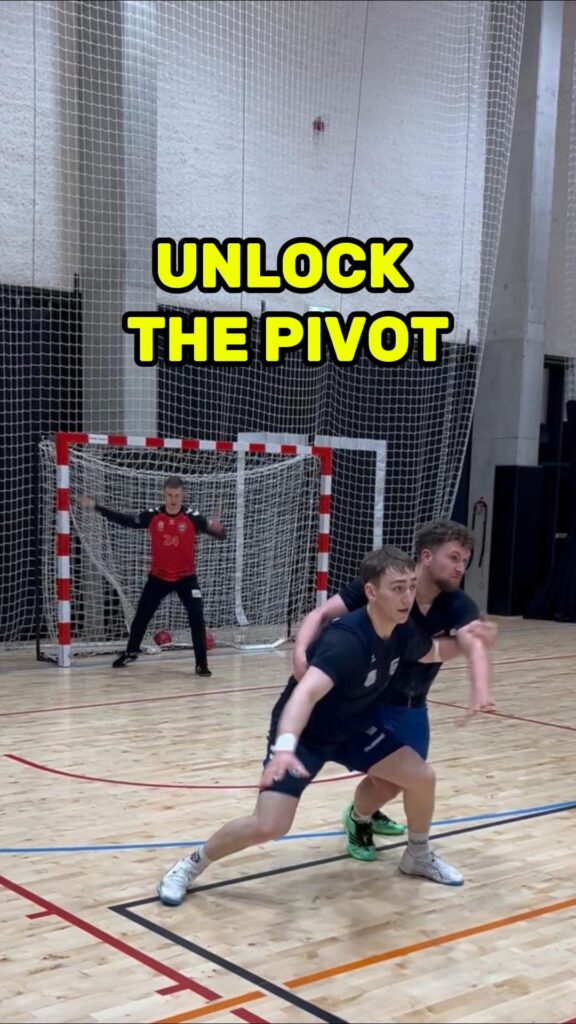
More balls to the pivot? It’s not just about the playmakers. 🧪🤾♂️
We often talk about „pivot intelligence. It’s important to predict your teammates movements, but also reading the defenders. A pivot must sense where the opponent is—whether through spatial awareness or simply „feeling” the defender on their back. Building these habits allows them to win the position even in the tightest spaces.
In this drill, we focus on two scenarios:
1️⃣ Fading outside when the defender tries to step out and cut off the pass.
2️⃣ Staying low and fighting for the ball when the defender stays back at the 6m line.
Regardless of your team’s tactics, it’s worth giving your pivot the tools to handle different defensive styles. 🧱
Want more content like this? Comment „Handball” and follow so you don’t miss a thing! 👇
Więcej piłek do obrotowego? To nie tylko kwestia rozgrywających. 🧪🤾♂️
Często mówi się o „inteligencji” obrotowego. Ważne jest przewidywanie ruchu kolegów z ataku, ale także czytanie obrońców. Obrotowy musi czuć, gdzie jest przeciwnik – czy to przez widzenie przestrzenne, czy po prostu przez „czucie” rywala na plecach. Dobre nawyki w tym elemencie pozwalają wygrywać pozycje nawet w największym tłoku.
W tym ćwiczeniu skupiamy się na dwóch sytuacjach:
1️⃣ Wyjście na zewnątrz, gdy obrońca próbuje nas obejść górą i odciąć od podania.
2️⃣ Obniżenie pozycji i walka o piłkę, gdy obrońca zostaje z tyłu na 6. metrze.
Niezależnie od taktyki Twojego zespołu, warto dać obrotowemu narzędzia, które pozwolą mu odnaleźć się przeciwko różnym stylom obrony. 🧱
Chcesz więcej takich materiałów? Napisz w komentarzu „Handball” i zaobserwuj profil, żeby nic Cię nie ominęło!👇